Modernizing Budget & Planning Technology
Accenture Federal Services, Service Design Lead, 2019
My Role: Service Design Lead, team of 5 · Timeline: 12 weeks · Impact: Delivered enterprise strategy, system design specifications, and prioritized roadmap for 20+ distributed offices
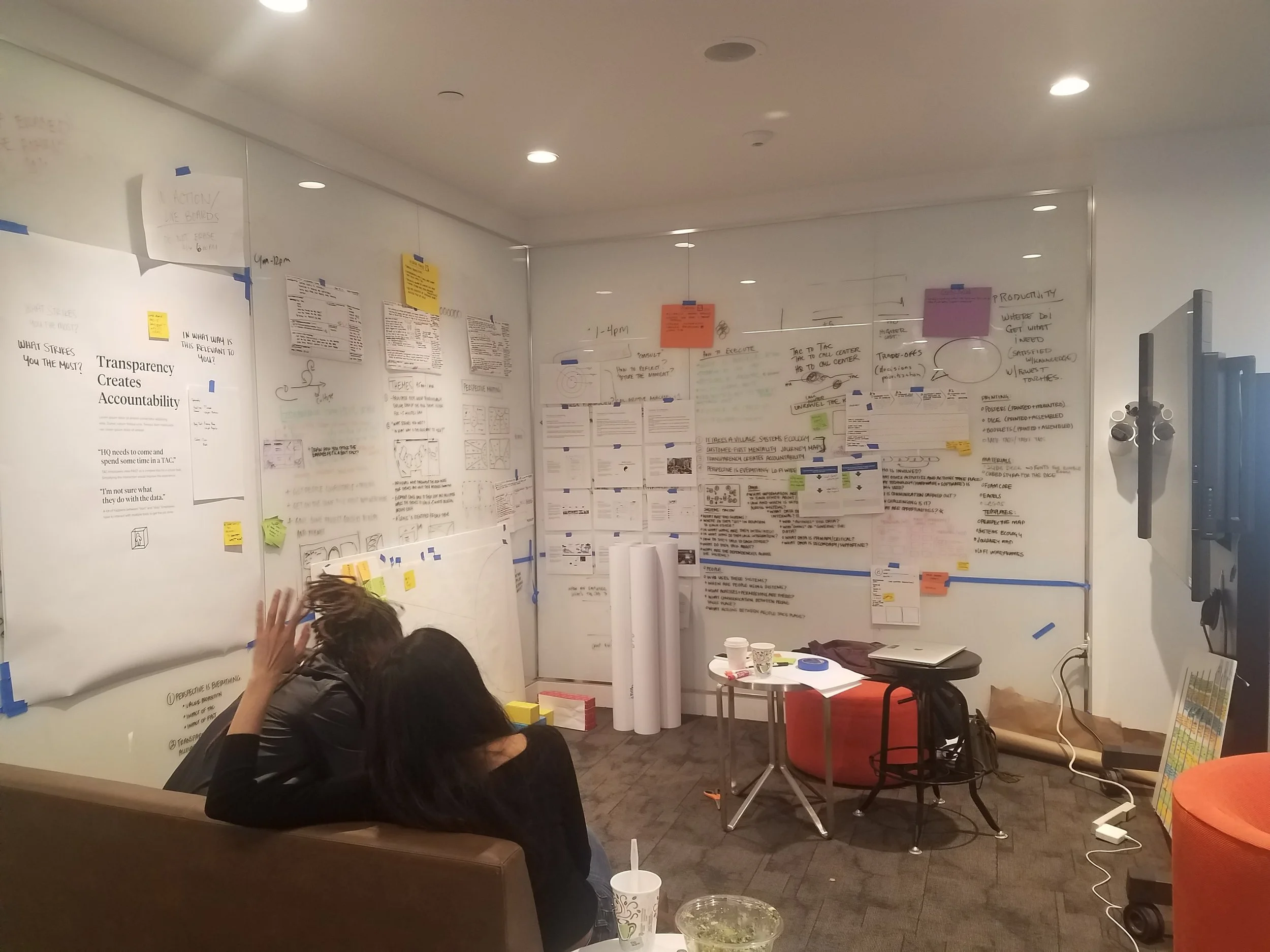
Preparing for a day-long workshop with representatives of the agency focused on refining and prioritizing our proposals. The outcome was a roadmap for new features, services, and other improvements.
The Challenge
A federal civilian agency's budgeting and planning process was fragmented across disconnected systems, inconsistent processes, and deep organizational silos. Headquarters and the agency's 20+ sites across the country operated with different tools, different workflows, and no single source of truth. The result was duplicative work, poor data integrity, and a planning process that no one fully trusted.
The Solution
I led a 5-person team through a 12-week service design engagement, starting with a workshop at headquarters to map the high-level budgeting ecosystem and shape our research approach.
We conducted 44 semi-structured interviews with budget and planning staff at headquarters and four sites. To surface the organizational dynamics that traditional interviews often miss, we used a projective technique: participants depicted the people and processes in their organization on an island and described how they related to one another. The technique gave people space to be candid about barriers they might not have named directly — competing priorities between teams, informal workarounds, trust gaps between HQ and the field.
Our research uncovered pain points around data collection and transformation, inconsistent processes across sites, and cultural challenges that were as much obstacles as the technology itself. We synthesized these findings into a full-day workshop where agency participants refined improvement ideas and worked through a gamified version of their own process to prioritize changes.
We delivered design specifications for a new system, process and organizational recommendations, and a phased roadmap with interim steps toward modernization. We also identified quick wins like Tableau-based dashboards using existing budget data, and a network fix at one site where the budget system took 30+ seconds to load a single page.
The Outcome
The engagement gave the agency its first unified picture of how budgeting and planning actually worked across its sites. And a concrete roadmap for how to modernize it. The design specifications, process recommendations, and quick-win interventions provided leadership with both a long-term vision and immediate actions they could take while the larger transformation was underway.
Design Process: We used a variety of techniques to understand not only the software needs of this agency, but also the processes and culture around budgeting and planning.
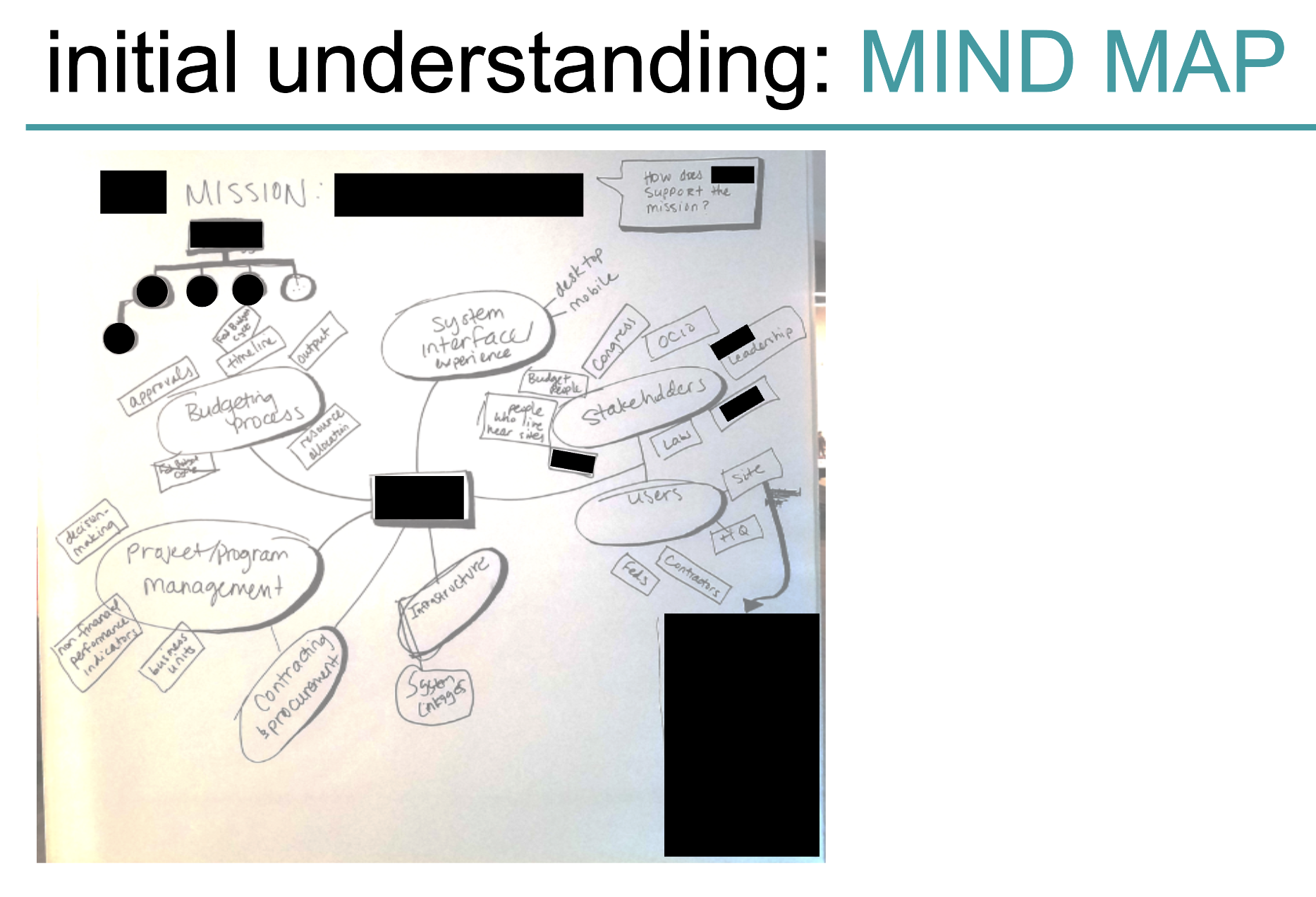
Our initial understanding of the problem space and players was reflected in a mind map and ecosystem map (not pictured here).
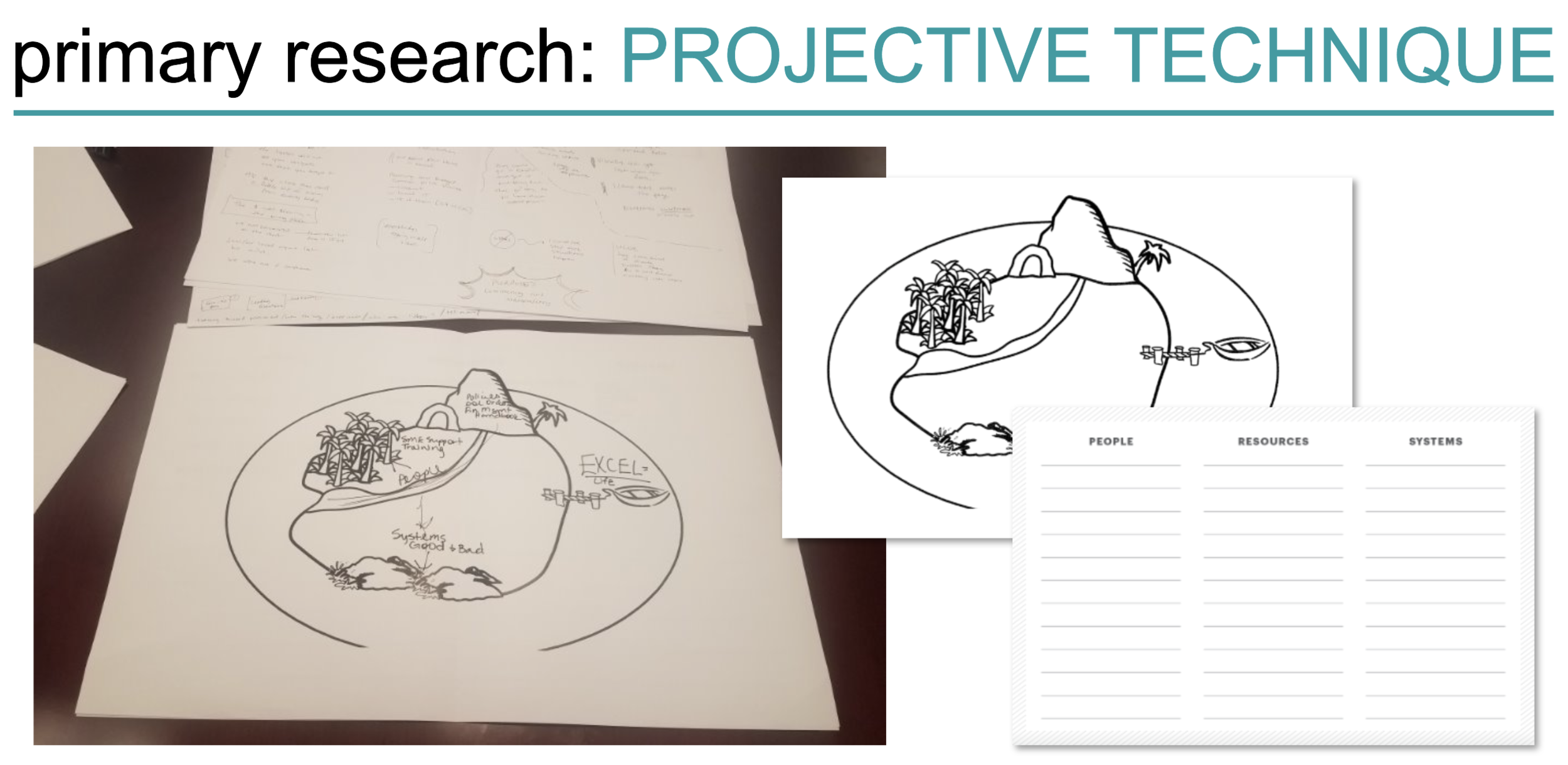
Research participants used this projective technique to depict the relationships between people, resources, and systems.