Redesigning Cloud Developer Support
Nava, Service Design Lead, 2020
My Role: Service Design Lead · Timeline: 12 months · Impact: CSAT increased from 76% to 84%; 4 of 6 recommendations adopted
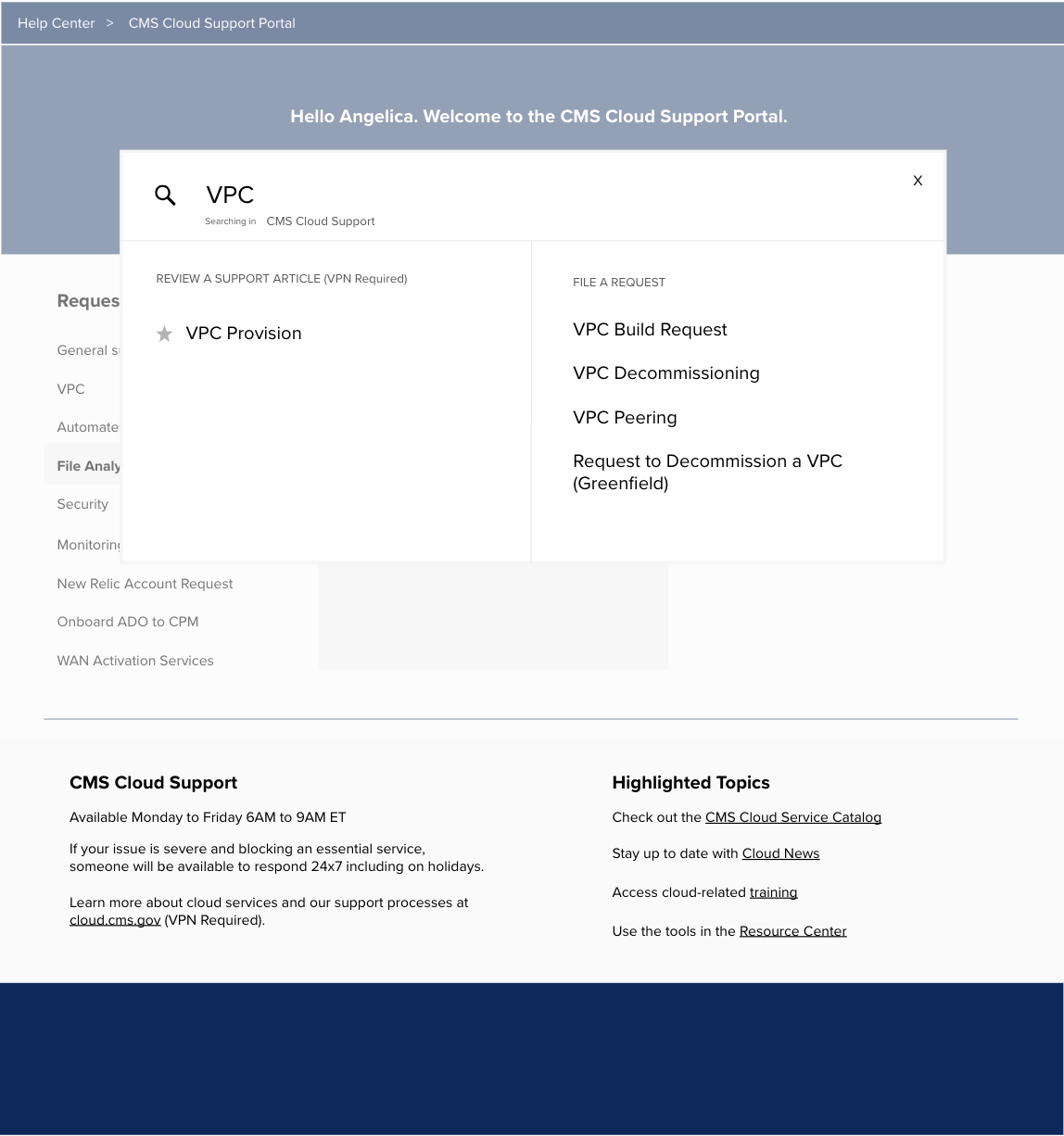
CMS Cloud Support Portal (re)designed around a search function.
The Challenge
The Centers for Medicare & Medicaid Services (CMS) was scaling a cloud platform to modernize how the agency builds and delivers digital services. But the support model hadn't kept pace. Customers described it as fragmented and cumbersome — responsibilities between teams were unclear, processes were poorly documented, and there was no consistent way to measure whether support was actually working. With a major contract transition approaching, the program needed to fix the support experience fast.
The Solution
I started with a discovery sprint — stakeholder interviews and secondary research to map the pain points across the support ecosystem and identify best practices. That research produced six concrete recommendations, four of which were adopted and implemented over the following year.
First, I tackled knowledge management. An audit of the program's runbooks revealed inconsistent documentation scattered across teams. I developed an information architecture for the CMS Cloud Confluence space and collaborated with another designer on a standardized runbook template — the first step toward a shared knowledge base.
Second, I redesigned the customer-facing support experience. I created a new support homepage that guided users to the right team and the right channel, consolidated guidance that had been scattered across multiple pages, and rewrote it in plain language. I also designed content across additional touchpoints — autoresponses, support articles surfaced before ticket submission — to reduce unnecessary tickets and help users self-serve.
Third, I worked with the CMS Cloud data team to build a Help Desk Monitoring dashboard and added support-specific questions to the quarterly customer satisfaction survey. For the first time, the program had quantitative measures of support quality and could track resolution times and pain points over time.
Fourth, I facilitated a workshop with support team leads to identify gaps in team responsibilities and developed recommendations for a unified service model. I then worked with the leads to document and disseminate team responsibilities, including escalation pathways, to create clarity for every support team member.
The Outcome
After implementation, the CSAT survey showed a sustained decrease in support-related frustrations. Customer satisfaction with Cloud Navigator and support services increased from 76% to 84% and held at that level across subsequent quarters. More importantly, the program had — for the first time — the instrumentation to keep improving: a metrics dashboard, a knowledge management system, and a documented service model with clear ownership.
Support portal design and content: The new portal featured a search function (highlighted above) that surfaced relevant content, and clear guidance (below) for users that still need to file a ticket.
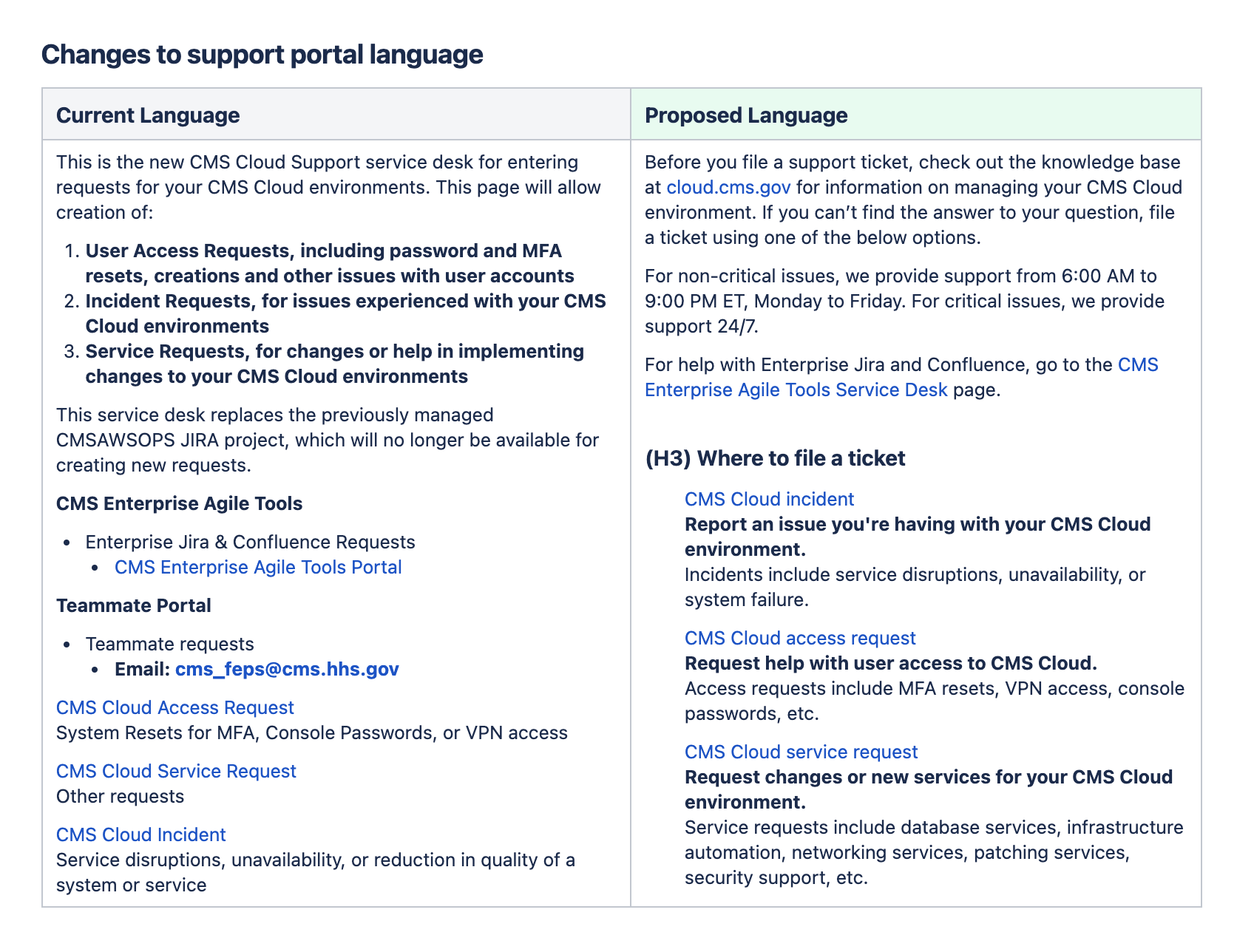
Plain language changes to support portal guidance with clear hierarchy.
Knowledge management and runbooks: This template and audit helped kickstart a knowledge management approach to support on CMS Cloud.
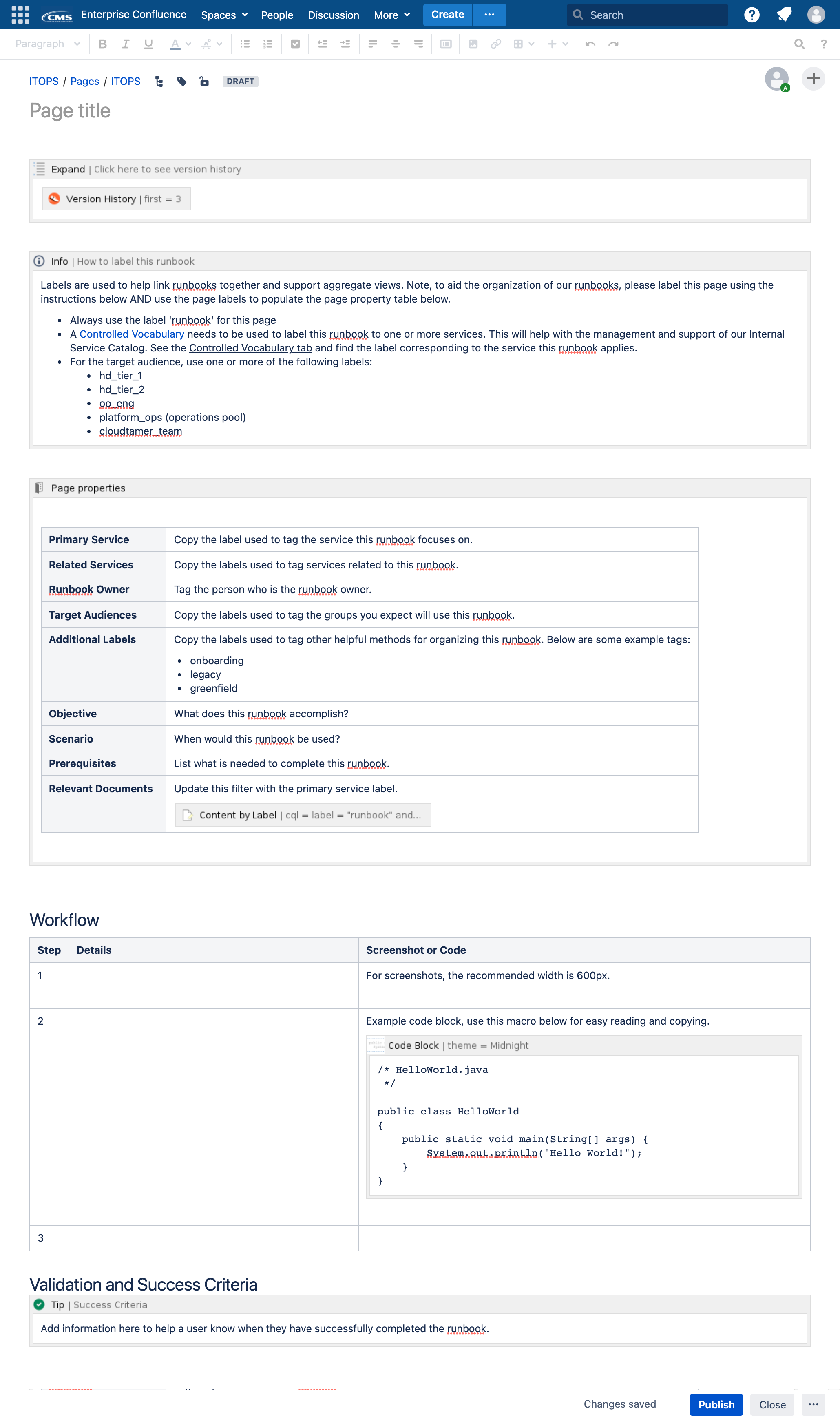
Runbook template created in Confluence to improve consistency of process and system documentation and simplify the creation of new runbooks.
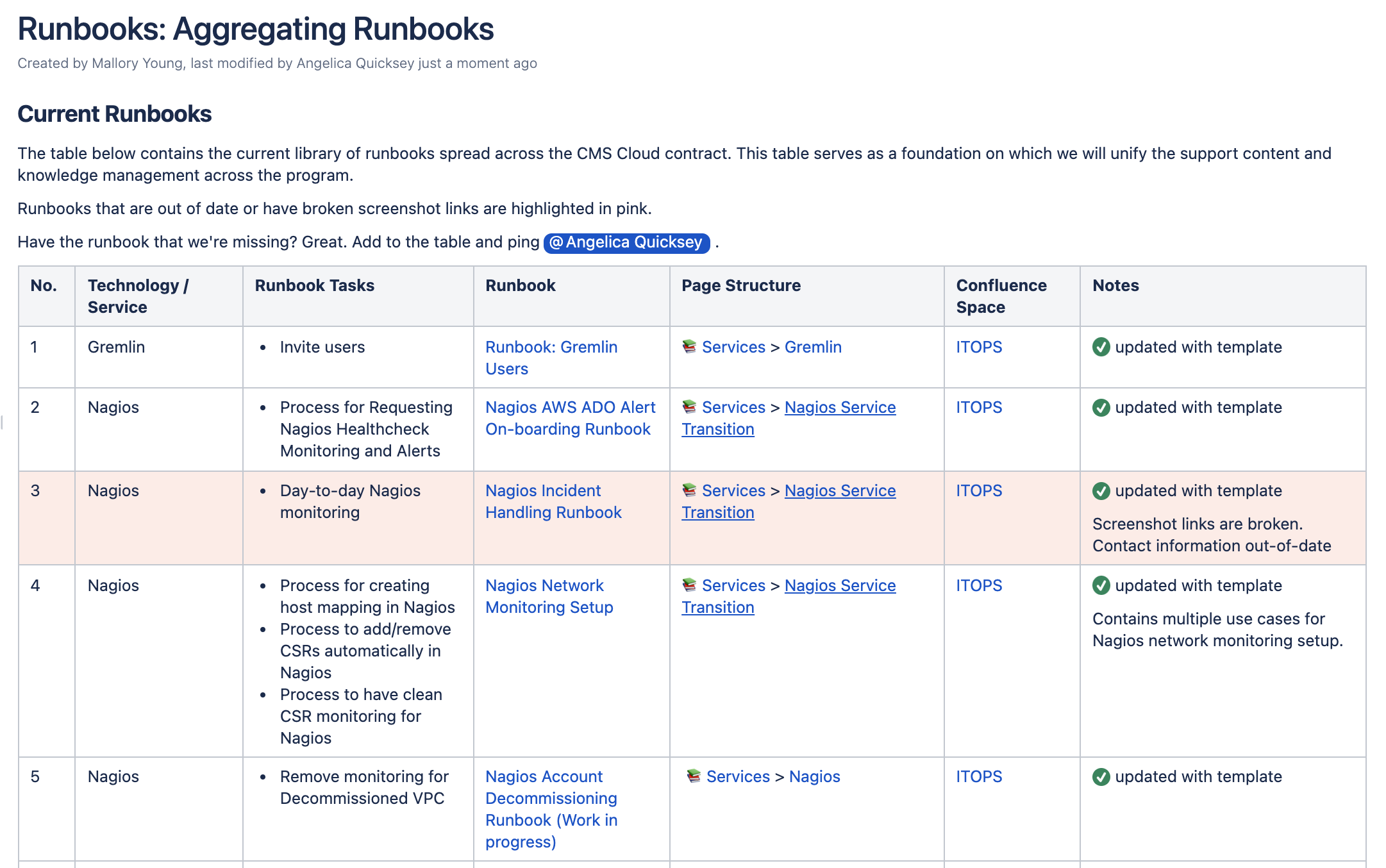
Audit of existing runbooks on CMS Cloud to support the team transitioning to the new template.